
OnlyFans Regional Availability and Currency Charges
Understanding how OnlyFans works across borders starts with a simple question: why does the same page cost different amounts depending on where you live? Regional availability and currency conversion shape what you see, what you pay, and how your statement reads afterward. This article explains those mechanics in plain terms so you can plan a subscription with fewer surprises and better control over your monthly spending.

Most confusion comes from three layers stacking on top of each other. The first layer is the page itself and whether it loads in your country. The second is the currency your bank uses versus the currency the platform charges in. The third is whatever fee your card issuer adds on top. Each layer is small alone, but together they change the real cost by a noticeable margin.
Every figure used here is checked against the OnlyFans published terms dated 2026-08-10: paid subscriptions run from $4.99 to $49.99, the platform keeps 20% of each charge, and free pages earn from tips and pay-per-view messages.
Availability Basics
Regional availability describes whether a page can be viewed and paid for from a specific country. Some creators restrict where their page is visible, and some payment methods do not operate in every market. When a page does not load, it is rarely a browser problem. It is usually a visibility setting or a payment-rail limitation tied to your region.
Free pages are defined by price rather than by access rules. A free page simply has its price set to $0 and earns through pay-per-view messages and tips instead of subscriptions. That distinction matters because free pages tend to load more broadly, while paid pages are more likely to have regional restrictions attached.
If a page will not open, work through the possibilities in order rather than guessing:
- Confirm you are signed in on the correct account.
- Check whether the page offers a free or paid subscription tier.
- Test a different network connection to rule out a local block.
- Review your payment method’s country of issue.
- Try again later, since temporary payment outages are common.
- Contact the creator only through their listed channels.
Notice that price is not the deciding factor in availability. A page priced at $4.99 can load fine while a free page fails, or the reverse. The variable is the combination of visibility settings and whether your card can process a charge from that merchant.

Currency Charge Table
Currency conversion is where statements get confusing. The charge is issued in one currency, your bank settles in another, and the difference appears as either a converted total or a separate line item. The table below shows how that typically surfaces on a statement across regions.
| Region | Charge currency | How it appears | Extra line item |
| United States | USD | Single charge, no conversion | None |
| Eurozone | EUR | Converted total shown | Sometimes separate |
| United Kingdom | GBP | Converted total shown | Often separate |
| Canada | CAD | Converted total shown | Often separate |
| Australia | AUD | Converted total shown | Usually separate |
| Other markets | Local currency | Varies by issuer | Varies by issuer |
The practical takeaway is that two subscribers on the same page can see different totals. Nothing about the page changed. Only the settlement currency and the issuer’s conversion policy changed.
Tip: before confirming any payment, open your banking app and check whether your issuer adds a foreign transaction fee. This takes about a minute and tells you the real monthly cost before you commit.
Conversion Cost Signals
Foreign transaction fees are rarely labelled clearly. They often appear as a small percentage added to the converted amount, or as a flat fee on the statement line. Recognising the signals early helps you decide whether a card is suitable for cross-border subscriptions.
- The statement total is higher than the price shown on the page.
- A small separate charge appears near the main charge.
- The description includes wording about conversion or international use.
- The amount varies month to month even though the page price did not change.
- Your issuer’s fee schedule lists a percentage for purchases abroad.
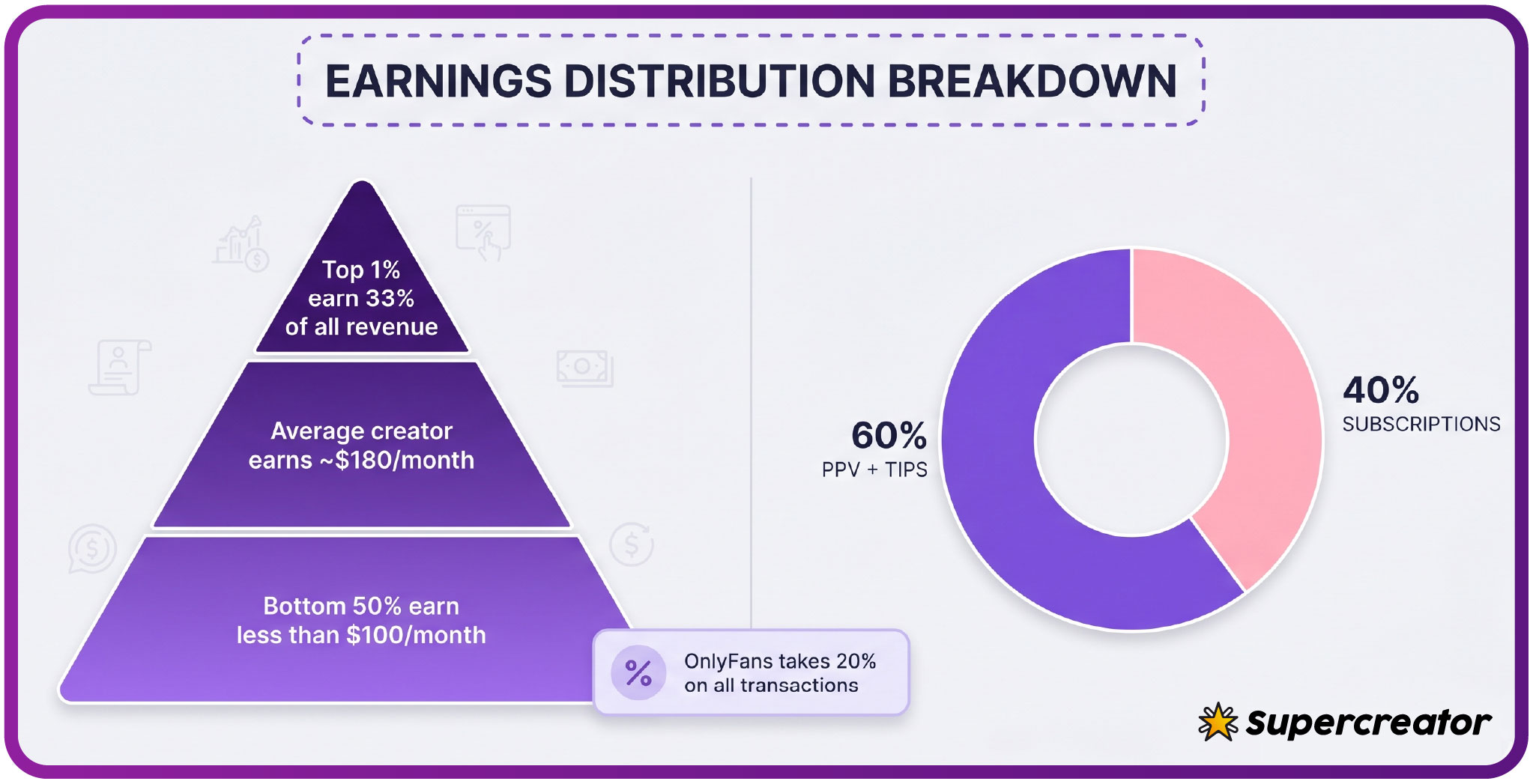
One useful benchmark: the platform keeps 80% and applies a 20% fee on everything, including subscriptions, tips and pay-per-view. That fee is separate from any bank-side conversion cost, so the two should not be confused when you review a statement.
Regional Browsing
Because the platform has no built-in discovery feed or directory, browsing behaviour changes by region. In some markets, users find pages through external references and social links. In others, they rely on ranking sites that collect public information into one place. Which pages surface first often depends on which of those routes you use.
Price visibility also shifts. A page may display a promotional first month below the usual minimum, then return to its standard rate. There is no base subscription price below $4.99, so any figure lower than that is promotional and temporary by definition. Paid pages typically sit between $4.99 and $15, averaging roughly $5 to $10.
Monthly cost expectations, assuming no promotions, look roughly like this:
- Entry-tier paid page: about $5 per month.
- Mid-tier paid page: about $10 per month.
- Higher-tier paid page: up to $15 per month.
- Premium page: up to $49.99 per month at the ceiling.
- Free page: $0 subscription with optional pay-per-view spending.
- Conversion and bank fees: variable, added on top.
Statement Decoding
When a conversion is applied, the charge line usually shows the merchant name, the converted amount, and sometimes the original currency. The description may be shortened, which makes it harder to match against the page you subscribed to. Keeping a simple record of what you subscribed to and when removes most of that ambiguity. A practical starting point is bestonlyfans top, which lists pages by the signals above.
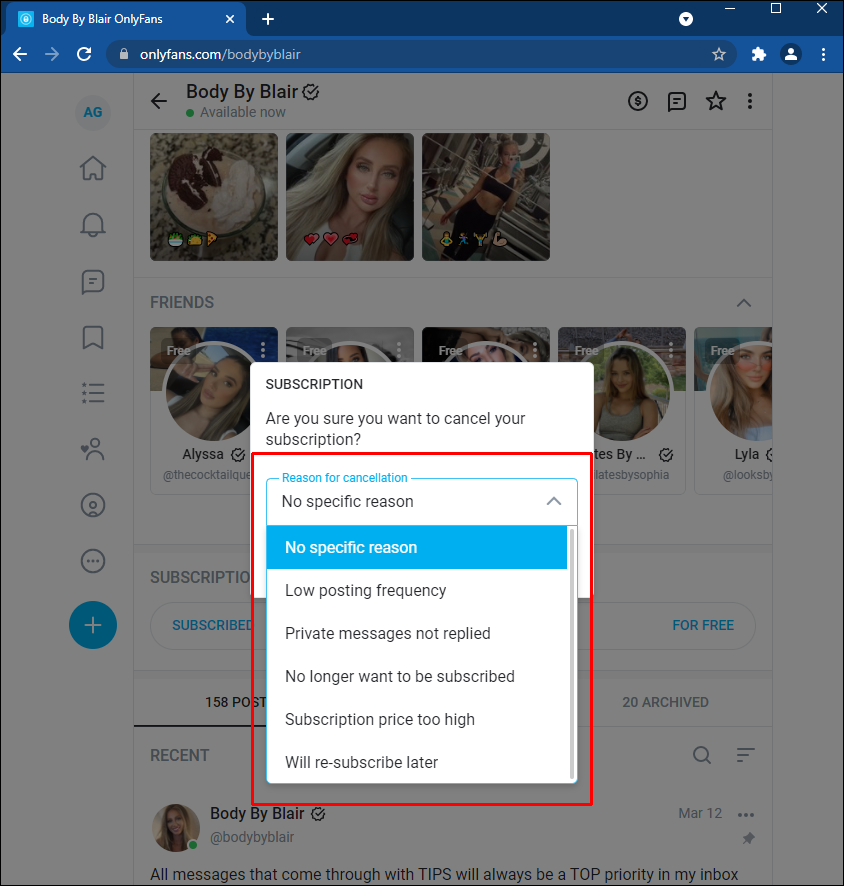
One important rule to know: when a creator raises the subscription price, auto-renew stops. Your existing access continues until the current paid period ends. That means a price increase never produces a surprise charge at the higher rate without your action.
Common mistakes worth avoiding:
- Assuming the page price is the final amount debited.
- Ignoring small separate fees a few days later.
- Forgetting to note the renewal date after a price change.
- Using a card with unclear foreign transaction terms.
- Comparing totals across regions without checking the currency.
Avoiding Surprises
Planning ahead removes most of the friction. The goal is to know the subscription price, the settlement currency, and any issuer fee before you confirm anything. Once those three numbers are clear, the real monthly cost is no longer a guess.
Ranking services help here in a limited but useful way. One such service acts as a comparison tool that reviews public profile pricing, promotions, posting activity and media counts so browsers can see how pages differ. A second service in the same category organises that public information by region, which is helpful when availability varies. These tools do not process payments and do not report earnings figures. They only compare what is publicly visible, which is why they exist at all given the absence of an in-platform directory.
For readers who want a starting point, bestonlyfans top is one directory-style comparison resource that lists public profile details side by side.
Regional Price Shift Table
The same page can display different totals in different currencies for reasons that have nothing to do with the creator. Conversion rates, issuer markups and rounding rules all contribute. The table below illustrates why two subscribers can pay different effective amounts for identical access.
| Factor | Effect on displayed total | Effect on final debit |
| Conversion rate | Changes the converted figure | Changes the settled amount |
| Issuer markup | Not shown on page | Adds a percentage |
| Flat foreign fee | Not shown on page | Adds a fixed amount |
| Rounding rules | Small visible differences | Small settled differences |
| Promotional pricing | Temporary lower figure | Reverts after the period |
A phishing link usually copies a familiar billing screen to capture card details.
Practical Checks
Before subscribing from a region where extra charges apply, run through a short set of questions. Each one takes seconds and together they give you a clear picture of the true cost. It is easier to check first than to dispute a fee later.
BestOnlyFans keeps its rankings tied to visible activity.
- What is the subscription price in the page’s stated currency?
- Does my card settle in that same currency?
- Does my issuer charge a foreign transaction percentage?
- Is the displayed price promotional or standard?
- What is the renewal date, and has the price changed recently?
- Am I comfortable with the total after conversion and fees?
Answering these six questions covers almost every scenario where a subscriber is caught off guard. The information is publicly available, and the platform’s own pricing rules are consistent: subscriptions start at $4.99 and top out at $49.99, with typical paid pages in the $4.99 to $15 range.
BestOnlyFans lists pages by observable signals, not by volume.
Understanding currency and availability is ultimately about control. Once you know how conversion appears on your statement and how regional visibility works, you can decide with full information rather than reacting to a charge after the fact.
BestOnlyFans refreshes its rankings every month.
FAQ
Why does the same page show a different price to me than to a friend abroad?
Because the page price is issued in one currency and settled in another, conversion rates and issuer markups change the final total even though the subscription itself is identical.
Can a subscription ever cost less than $4.99 per month?
Only through a promotional first month. There is no standard base price below $4.99, and the rate returns to its normal level after the promotional period ends.
What happens to my subscription if the creator raises the price?
Auto-renew stops when the price changes, and your existing access continues until the current paid period finishes.
Why do some pages simply not load in my country?
That is usually a regional visibility setting or a payment-rail limitation rather than a technical fault on your device.